Ten Miles, Ten Times the Price: Inside Britain's Web Design Postcode Lottery
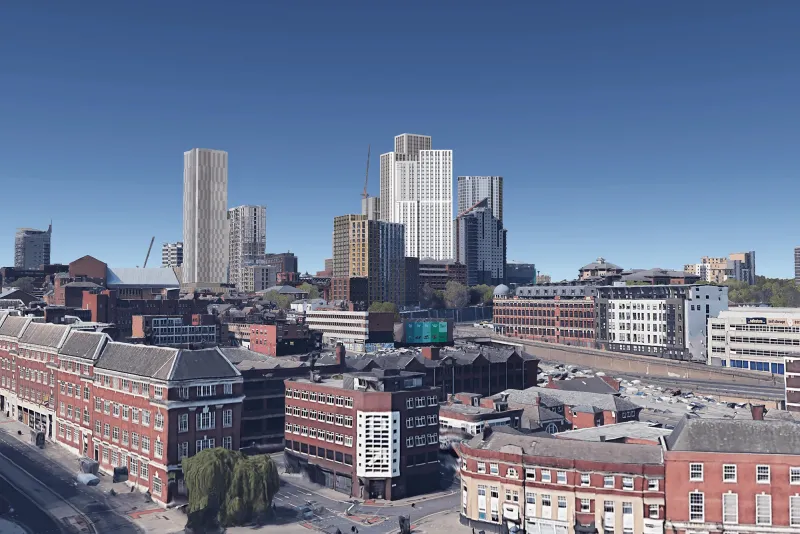
Photo: modern uk city skyline Leeds London comparison business district, via futureskylines.co.uk
Ask three web designers to quote for the same small business website and you'll get three wildly different numbers. Ask them in different cities, and the gap becomes absurd. A tidy five-pager for an independent bakery might run to £700 from a freelancer in Sheffield. The identical brief, handed to a London agency, could come back at £7,000 — plus VAT, plus a discovery phase, plus a workshop nobody asked for.
Same country. Same internet. Same WordPress install, probably. So what exactly is the extra £6,300 buying?
The Geography of the Quote
Start with the obvious: overheads. A studio in Clerkenwell pays rent that would make a Leeds agency weep into its flat white. Salaries follow suit — a midweight developer in the capital can command £50-60k, while the same skills in Newcastle or Cardiff might cost £15k less. Those costs have to land somewhere, and that somewhere is the invoice.
But overhead only explains part of it. The rest is positioning. Agencies in London aren't just selling websites; they're selling proximity to venture capital, to media, to the client's own boardroom. There's a quiet belief — rarely stated out loud — that a Soho agency must be better than a Barnsley one, because if it isn't, why is it in Soho?
It's the digital equivalent of buying the branded painkillers. Same ibuprofen, different box.
What Freelancers Say When Nobody's Listening
Talk to freelancers outside the capital and a pattern emerges. Many deliberately undercut their London peers, not out of charity but strategy — they know their cost base is lower and they'd rather win the work than win the argument. Others admit to a kind of pricing imposter syndrome, charging what they think the market will bear and being consistently surprised when that's more than they expected.
A few have cracked the game entirely. They price by value, not geography, quoting a Manchester café and a Mayfair law firm the same rates because the outcome — a site that earns its keep — is worth the same to both. These are usually the ones with waiting lists.
And then there's the reverse migration nobody talks about: London agencies quietly outsourcing build work to freelancers up north, marking it up, and presenting it as their own. The postcode premium, in some cases, is literally a project management fee.
Didn't Remote Work Fix All This?
In theory, the pandemic should have flattened this landscape. If a developer in Hull can push code to the same GitHub as one in Hoxton, why does location still move the price by an order of magnitude?
Partly because clients buy reassurance, not code. The in-person pitch, the office you can visit, the account manager whose face you recognise — these are comforts, and comforts carry a premium. Remote work made talent distribution equal, but it didn't redistribute confidence.
Partly, too, because the market is opaque. There's no Which? review of web design pricing, no standard rate card. A first-time buyer has no way of knowing that £5,000 is a reasonable London price and a frankly extortionate Leeds one — or vice versa, for a complex build.
What Buyers Should Actually Pay For
Strip away the geography and the honest variables are these: the seniority of the people doing the work, the quality of the thinking before a single pixel is placed, and the agency's ability to stick around after launch. A cheap site that dies six months in is the most expensive site of all.
So the advice for British SMEs is refreshingly unglamorous. Ask who's actually building it. Ask for two references from businesses your size. Ask what happens when something breaks on a Friday afternoon. The answers will tell you more than the address on the proposal.
The postcode premium is real, and it isn't going away — perception moves slower than technology. But the businesses that see through it, that hire on evidence rather than address, are quietly getting the same websites for a tenth of the price. That's not a discount. That's just good arithmetic.