Shed Nation: Meet the Brits Running Serious Tech From the End of the Garden
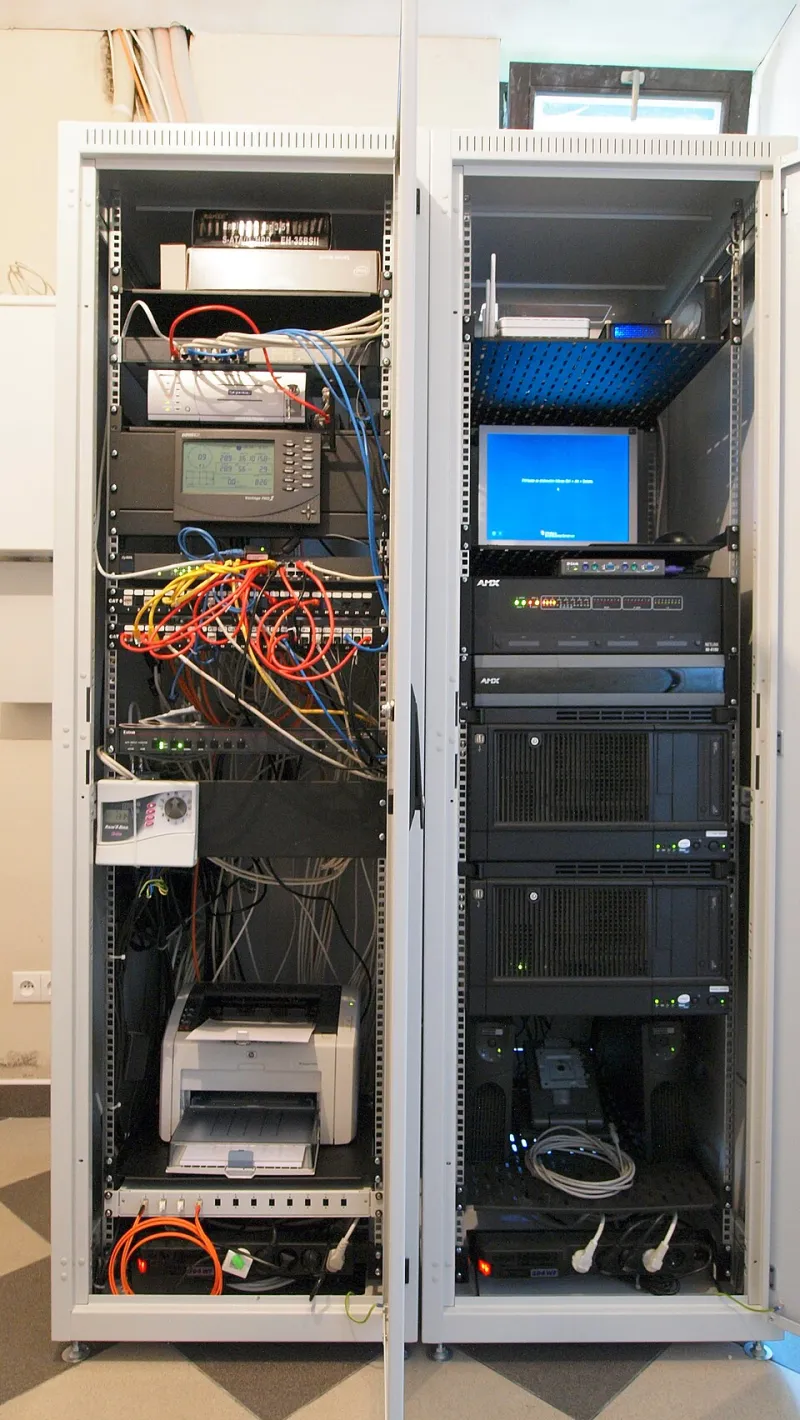
Photo: Jan Prucha, CC BY-SA 3.0, via Wikimedia Commons
Behind a semi-detached house in Leamington Spa, past a bike with a flat tyre, there's a shed. Inside the shed: not tools, not a lawnmower, but fourteen hard drives, two refurbished Dell servers and a UPS the size of a microwave. This is where Dave — a 41-year-old IT contractor who asked to keep his surname off the internet, which tells you a lot — runs the media library, backups and home automation for his entire household.
'I started because a streaming service removed a show I'd bought,' he says. 'That was it. That was the whole origin story. I decided I wanted my stuff to actually be mine.'
Dave is one of thousands of British self-hosters: a loose, largely online community building and running their own server infrastructure from garages, lofts, spare rooms and, yes, garden sheds. Spend ten minutes on the relevant subreddits or the UK-focused forums and you'll find people running everything from a Raspberry Pi in a cupboard to full rack-mounted setups with backup power and offsite replication.
Why People Are Un-Clouding
The obvious answer is money. Cloud costs have a habit of creeping — the storage bill that doubles, the egress fees that arrive like a parking fine. For a household, self-hosting a media server is a hobby with a maths problem attached. For a small business, it can be a genuine financial argument.
But talk to enough of these people and money isn't really the driver. The word that keeps surfacing is sovereignty. Who holds the data? Under whose jurisdiction? Can it be switched off by a company in another time zone on a whim?
One self-hoster in Yorkshire runs the booking system, file storage and email for his wife's physiotherapy practice entirely from hardware in his loft. 'Client records on someone else's cloud always felt like renting a filing cabinet with a stranger's lock on it,' he told me. 'This way, if the internet dies, the business keeps running off a local box until BT sorts itself out.'
That's the resilience argument, and it's not a mad one. In a country where rural broadband can still be a coin flip and outages make local news, a box in the loft that keeps working when the outside world doesn't has real appeal.
The Honest Caveats
Before anyone cancels their AWS account: self-hosting at home is not a serious enterprise strategy. Consumer internet connections come with terms of service that frown on this sort of thing. Home hardware has no climate control, no physical security and no redundancy unless you build it yourself — which most hobbyists cheerfully do, but which most businesses absolutely should not trust to a shed.
There's also a skills cliff. These setups work because the people running them enjoy maintaining them. The moment it becomes a chore, it becomes a risk.
What Enterprise Should Actually Notice
So why write about it at all? Because fringe movements are often early readings of mainstream sentiment.
The self-hosting wave tells you three things. First, a meaningful chunk of people — including business owners — are actively uncomfortable with total cloud dependence, and that discomfort is growing as costs rise. Second, the tools have got dramatically better: open-source platforms like Nextcloud, Proxmox and Home Assistant have made DIY infrastructure approachable in a way it simply wasn't a decade ago. Third, the conversation has shifted from 'where is data cheapest?' to 'where is data safest?', and that's a procurement question every UK vendor should be ready for.
The realistic middle ground is already emerging: hybrid setups where sensitive data sits on hardware you control and the heavy compute lives in the cloud. Some enterprises are quietly doing exactly this, citing UK data residency rules and latency.
Dave, back in his Leamington shed, has a simpler summary. 'The cloud is just someone else's computer,' he says. 'Sometimes you want it to be your computer.'
He's not going to put a hyperscaler out of business. But if enough people start asking his question, the industry will hear it.